Tuesday, March 31, 2009

Pension Battle Continues in St John


From the St John Telegraph

The pension battle continues in St John, New Brunswick. It is one of the first of it's kind in Canada and may be the precedent case for public sector pensions across Country.
These plans are broke but no one wants to admit it, least of all those who are expecting a gold-plated pension plan paid for by the taxpayer.
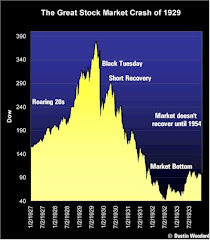
As you can see in the editorial above the hope is that "A stock market rebound will restore some value to the pension fund's portfolio. It won't reduce the city's pension obligations or protect taxpayers from future deficits."
I am amazed by the insight of the Telegraph as they continue to report on this issue. They understand the problem, the unfairness of the situation and the huge cost to taxpayers and our society if the problem is not dealt with.
It is ironic that this situation is occurring in St John where the size of the problem is minuscule compared to pension problems lurking elsewhere in Canada. The Telegraph reports "Saint John's municipal pension plan has a going-concern deficit estimated at $146 million. Deficit payments could reach $9.7 million next year." This compares to the situation in Ontario for example with pension funds short an estimated $100 billion... yes billion.
The Ontario government in their recent budget announcement committed $10billion in pension payments (taxpayers money) to Ontario public sector plans over the next 4 years. The Ontario Teachers plan has accumulated over $110 billion of taxpayers money and is estimated to be short in excess of $30 billion. This is only one of several jumbo pension plans in Ontario with many more across the rest of Canada.
I thank the Telegraph very much for their coverage and the editorial cartoon. You can see the Blood Sucking Parasite cartoon on the side bar of the blog. Keep up the good work.

Wednesday, March 25, 2009

Pension Reform in Canada


It is apparent that the current pension system that we have in North America does not work and needs to be rebuilt.

In the United States many Governors and business organizations have taken on the task of examining what went wrong with our public sector pensions and what needs to be done to reform the system.

Gold-plated Pensions

The problem is that the taxpayer is funding gold-plated pension plans for public sector employees. At the same time taxpayers will never come close to having an adequate pension or retirement savings plan.

In Canada it is estimated that the retirement system currently has $800 billion of assets held for public sector pension employees. In the private sector the amount is only $300 billion held in pension accounts. Despite this accumulation into the public sector pension plans, they are still estimated to be $100 billion short of the funds needed to properly fund them.

The public sector employees make up 20% of the workforce yet has accumulated the largest share of total pension assets. The 80/20 rule applied here; 20% of the workers have accumulated 80% of the pension assets. You can click here to see the list of the largest pension funds in Canada, careful it is a PDF file. Top pension funds in Canada

As the St John Telegraph reports the public sector plans "are considered the best because they promise a certain level of income, regardless of market conditions, and are usually based on the worker's salary and years of service...
Defined-contribution plans, which are used by many private entities, are determined by the accumulated contributions to a retirement savings plan, plus earned interest."

Throughout North America government are having to deal with the problem of these public sector pension plans. Reforms have begun in many States including Rhode Island, New York, Michigan and many more. In Canada however, governments are slow to discuss reforms. The problem is too many politicians, senior government officials and academic experts who need to initiate a public discussion about reform are counting on a gold-plated plan for their retirement.

Reform will be forced upon the system.

One of the first governments to address pension reform appears to be the Province of New Brunswick. As a result of a huge projected deficit, partly caused by required pension contributions, the issue of pension reform is being discussed. It will be a discussion that will be forced to other provinces as well.

Some of the reform issues being examined include:
* Eliminate the rule that allows employees to retire without penalty when they have 85 combined years of service and age, the so-called Rule of 85.

* Remove disability benefits from the pension plan.

* Change the way the city calculates pension payments to retired employees; instead of an average of earnings over three years, payments would be an average of earnings over 10 years.

* Change the annual increase of pension payments retirees receive to one per cent from two per cent.

Although these are admirable changes to the system, nothing more than a move to defined contribution plans will save the system. We will have to watch how this progresses.

Saturday, March 21, 2009

The True Value of Pensions

Today I was at the Farmer's Market in Hamilton for my usual weekly shopping. Outside the Federal Building I came a cross a large protest by the local USW union protesting for protection for pensions.
They have a right to be concerned about their pensions and the security of these pensions. I am not sure who they were protesting to but hopefully it gave them a sense of confidence that their pension would be dealt with fairly. They have worked long and hard for these pensions and trusted the companies they work for to save for their retirement. In hind-sight it was foolish to trust their unions and employers but that is what happened.
The people in the federal building where they were protesting are not very sympathetic as they themselves have fully guaranteed gold-plated pensions guaranteed by the taxpayers.

Accumulated Public Sector Pensions
As I have mentioned before the problem with the pension system is the cost of those gold-plated pensions that are given to the public sector. In Canada it is estimated that Canadian taxpayers have funded into these public sector plans which cover 20% of the workforce, in excess of $800 Billion, yes billion. Still the taxpayer will have to fund hundreds of billions more to fulfill the guarantees made on these pensions.
At the same time the private sector in Canada as accumulated almost $300 billion of pensions. We have funded more into the public sector than we have funded into our own pensions. And only 20% of all workers are in the public sector.
The public sector pension is not truly a pension but a guaranteed retirement income for life. It is based on a 70% of final working income, paid for life, guaranteed to go up each and every year and guaranteed to continue to spouses.

Value of these pensions
Let's look at the value of these guaranteed stream of income. A teacher currently in Ontario retires with over $90,000 of income. The retirement income (pension) value for this teacher is in excess of $60,000.
As a pensioner it has been estimated that the tax burden is 15% lower than a working Canadian. A working Canadian pays for CPP and EI as well as other related payroll taxes. For example, a self employed individual funds almost 10% of salary into CPP. The value of this 15% savings is $9,000 to the teacher's pension.
The OECD has estimated that a pensioner generally has a 30% lower cost of living. Part of the calculation is based on the fact that in Canada 80% of pensioners have no mortgage on their home. Most public sector workers are in the top 20% of income in Canada so probably most have paid off their mortgages. Also there are lower costs associated with not working such as transportation, clothing, telephones and lunches. This 30% adds another $18,000 to the retirement income.
We start with the $60,000 in guaranteed retirement income add another $9,000 for lower taxes and add another $18,000 for lower cost of living and we are now at $86,000. This is the equivalent of a $86,000 working income for the retired teacher.
The average working Canadian earns a little over $38,000 each year.

Time for Reform
These guaranteed retirement incomes need to be reformed.
In this example we have a retired government worker living on a taxpayer funded standard of living at $86,000 per year. Many families have two guaranteed retirement incomes.
Considering most of these retirement incomes are triggered around age 55, many are free to work other jobs. Most of these jobs are in other government departments or the same ones. This is where their connections are and where they feel comfortable working. Worse yet are those double dippers brought to my attention from J. Meyer - Teaching the Double Dip

Saturday, March 7, 2009

The end of part one


Over the past several years as part of my business I have watched the problem of public sector pensions. The problem has grown much more serious, painful and acute in just the last year.
In the early days of media and general public recognition of the public sector pension problem very few commentators discussed the issue. There were a few organizations such as CD Howe and the Canadian Federation of Independent Business CFIB who understood the serious implications of what the CFIB called the Pension Predicament.
Today the issue has become a topic of mainstream discussion throughout our society. At every business or charity function I attend the topic is brought up for heated discussion and every day there is a front page article or pension editorial about public sector pensions. It seems that almost everyone understands the issue and has an opinion on it.
This is a good situation to be in because now society can begin the work of changing the pension system to make it fair for all.
Part of the problem with the pension issue is understanding the nature and dynamics of the serious problem we had created. As a professional working in the area as a consultant to small companies, it took me a while to understand how the system worked in relation to the different types of pensions plans. I always saw a huge difference between the different types of pensions some of my clients had. The public sector employees had pensions that far outshone anything a private sector employee would be given.
Today I understand the pension predicament as the fundamental differences in the way the private sector and public sector pensions work. The private sector plan is a traditional pension based on money accumulated over the working career of the employee. However, the public sector pensions is based on a guarantee of continuing income based on retirement income levels.
In Canada the public sector pension norm is that 70% of retirement income will be guaranteed for life. The income is usually structured to include CPP but comes with several additional guarantees as well. It is guaranteed for life, guaranteed to increase every year and guaranteed to a surviving spouse, usually at 60%. The public sector pension is also know as a defined benefit pension. It should be called a guaranteed retirement income stream.
The fundamental problem for the public sector pensions today is that they are not sustainable and unfairly places onto the backs of the taxpayer to finance.
There is no way that given the promises made, public sector pensions can be sustained. Several attempts over the years have been made by the magic of actuarial analysis to figure out how much these plans should accumulate in order to remain solvent. However, most of these actuarial attempts have turned out to be a slight of hand trick used by the public sector unions to deceive the taxpayer into promising higher and higher guaranteed levels of retirement income.
The trend over time has been for higher payouts at retirement and earlier payouts. The formula for calculating the defined pension (guaranteed retirement income) is based on a formula of working years and the income earned in those years. For example, a typical private sector defined benefit plan would be based on the total working career of the employee. The public sector plan is based generally on the average past 5 years of working. Today a Government of Ontario contract is being negotiated based on a past 3 years average retirement income.
The total commitments made to public sector pensions is estimated to be short over $100 Billion dollars in Canada and in the U.S. a recent report shows them to be short $237 billion. This is after about 30 years of pumping hundreds of billions of dollars into these plans by taxpayers.

Tuesday, February 24, 2009

OMERS Posts results for 2008


OMERS released their much awaited financial results for 2008. As anticipated the markets pummeled the fund and along with it the taxpayer.
The Ontario Municipal Employees Retirement System is the 3rd largest pension fund in Canada. These pension funds have been the largest diversion of taxpayer's money since the secound world war. This money has gone into public sector plans to prepare for the retirement of those society used to call public servants and now refers to as public masters.
On a positive note to the members of the OMERS plan, in a statement from the President and CEO of OMERS "I know that the global financial downturn has raised concerns among some of our OMERS members, especially those approaching retirement as well as retirees who are now relying on their pension income to make ends meet. The first and most important thing I want to do is to assure all members that their pension benefits are secure. They are based on an individual’s years of service and earnings – not on the performance of the stock market."
This statement is designed to comfort the public sector employees that no matter what the markets do in the end the plan is guaranteed by the taxpayers for the promised pension income. Furthermore any enhancements over the years have been determined by the courts to be an unbroachable contract between you (the taxpayer)and the public sector employee for these benefits.
These plans are guaranteed by you the taxpayer to provide a guaranteed stream of income to the public sector employee for the rest of their lives. Generally the income stream to be guaranteed is based on 70% of the last 5 year's income of working salary. Recently several members of OMERS in Ontario increased the income to the last 3 years of working income, congratulations. You have also guaranteed to increase their pension income every year and pass along 60% to a surviving spouse regardless of whether or not they have their own public sector pension.
Thanks for your appreciation to the hard work and service of Canada's public sector. Thanks to you they will have a gold-plated pension plan.
For an excellent analysis of the details of the financial report on the plan please read the Pension Pulse by LEO KOLIVAKIS
I will be watching the progress on the reports of this situation as they are analyzed by the media over the next few days. But in the meantime get back to work we need your tax dollars to fund these things!

Here is a list of Canada's top pension plan - Top Plans PDF.

Monday, February 16, 2009

Prime Minister of UK makes call to scrap Member of Parliament final pay pensions


In a bold move the current Prime Minister of Britain wrote a letter to a parliamentary review board asking them to consider moving the MP gold-plated pension plan to a contributory plan.
This is possibly a first step in the reform of the public sector pension system in the UK.
This article that was sent to me by Julian Rhone is certainly a shocker and will generate a lot of controversy in the coming months.
Critics of the public sector pension system have come to the conclusion that the defined pension system is an unsustainable burden for taxpayers over the long term. The amount of money that needs to be pumped into the system to fund the public sector plans is huge and no longer palatable to most taxpayers. The system in the UK, in my understanding, is a pay as you go system. Whereas in North America some attempt, however feeble, has been made to accumulate pools of money to fund the obligations. Both are unsustainable for taxpayers.
In a shocking comment Brown stated in his letter that "The Government is committed to providing public-service pension schemes that are affordable and sustainable in the long term, consistent with the principle of fairness for all taxpayers and between generations." The comment is shocking because although most taxpayers knowledgeable of these plans feel the same way it is suicide for politicians to actually state this fact.
As reported in The Independent the Prime Minister urged the SSRB chairman, Bill Cockburn, to consider the "full range" of options to reduce the taxpayers' contribution. These would include "increases in the pension age; changes in the provisions for retirement on the grounds of ill health; increases in MPs' contributions; changes in the accrual rate, changes in the maximum level of benefits that can be built up and the merits of defined-contribution structures".
The Independent stated that the heat that politicians are taking from the private sector and taxpayers is painful. For Brown to write a letter like this, it is more painful than the wrath that will be hailed down upon their heads by the public sector unions. This is a good thing. For far too long, in the interests of political expediency, public sector defined benefit pensions have been excluded from debate by legislators around the world.
As I have watched the debate and analysis of public sector pensions move across the globe, there is a trend for major changes to first surface in the UK and the rest of Europe and then proceed to cross the ocean. Let's hope this is a trend that is on it's way to our shores.

Tuesday, February 10, 2009

Pension and Public Sector Reform Gaining Steam


As the financial crisis worsens some public figures are stepping up to reform the system. It may be an impossible task but is essential to economic recovery.

All world citizens are faced with the same challenges in this financial crisis.

The Governor of the State of Rhode Island made a speech that will be instrumental in addressing the problems of the system. Complete Text: State of State Address

"In the midst of all the economic turmoil, tonight Id like to start out with
some uplifting stories.

First, what we need to do to get through this economic downturn. Second, how we better position our state for the future. And third, what we have already done to put in place the building blocks to create a stronger and more competitive.

First, we must strengthen our safety net for our most vulnerable citizens

we must reform our public employee pension and benefit plans so that they are fair and equitable, affordable and sustainable. And third, we must slow the rise of local spending by giving our mayors and town councils the ways and means to control spending and balance their budgets without raising property taxes.

I know that our proposed changes are difficult ones, and I know there are many critics.

But, the only alternative we hear from the special interests and lobbyists is raise taxes, because, they cant get by on less.

We need every department of every city and town to sharpen their pencils, tighten their belts, and be smarter about how they spend the taxpayers money! We need the unions to realize that our cities and towns cannot afford business as usual-they cannot afford the wages, the pensions, the health care, and the work rules that were bargained for. The world has changed dramatically. The cost of defined benefit pension plans and healthcare have spiraled out of control.

These costs are crushing our taxpayers - most of whom dont have such pensions and health benefits. This is not about picking on anyone-rather this is about picking up the burden together, for the sake of our children, our seniors on fixed incomes, and those truly dependent upon us. This is about pulling together to get us through this severe downturn.

Were not alone in this! Connecticut and Massachusetts are facing multi-billion dollar deficits.

California has an unemployment rate of 9+%, and a $45 billion deficit. Governor Schwarzenegger has declared a fiscal state of emergency. They are out of money!

They're postponing tax refunds, college tuition payments and requiring state employees to take 2 unpaid days off each month. We cant let this happen in Rhode Island.

I encourage every public employee union to sit down with the mayors, town managers, the city and town councils, and the school committees to become a part of the solution. Help your communities get through this! Some have already stepped forward and I thank them.

Our immediate challenge in the next few months will be to use the anticipated federal stimulus money wisely and sensibly. We must use the additional funding to bridge the deficit, support tax relief and structural reforms, grow jobs, and grow our economy.

Today, the pressing issue is growing jobs in those sectors of the economy that will bring money and investment to our state.

To illustrate why our state continues to be so vulnerable to economic downturns, I want to share a chart with you! In 1978, Rhode Island had 137,000 jobs in manufacturing which represented 34% of the entire workforce-today we have 46,000 representing under ten percent of the workforce.

I want to repeat that. The state has reduced employment by 25 percent, while the cities and towns have increased employment by 38 percent.

Ladies and gentlemen, thats why your property taxes are so high and keep rising. Thats also why it is so imperative that we find ways to consolidate services, and reduce the burden on our economy and our taxpayers. Government services consume our economy's resources --- they don't create them!

The competition, among states and countries for companies and jobs is intense. There are many factors that go into a company's decision about site selection-available workforce, energy costs, site readiness, over-all business climate, and, yes, taxes. We have been working hard on the first four - but now we need to make significant changes in our tax competitiveness.

Im tired of people writing stories about R.I. being tax hell, or ranked near the bottom in business tax competitiveness. We need to reverse the trend on that chart with bold, business friendly tax reforms.

I am firmly convinced that if we dramatically change our tax structure, our economy will produce jobs! What Rhode Island needs now is more taxpayers; not more taxes. This will only come from a tax policy that says to our business community, stay here and grow your business, and by the way, tell all of your out-of-state business friends that R.I. is a great place to do business. I want to send a loud signal that - R.I. is open for Business!!!!"

It will be a challenge indeed for all political leaders. Many cannot rise to the challenge but my hope is that those who do will be an example for others.

The Biggest Economic Issue for 2009 will be Pensions

As the world starts to understand the implications of the biggest economic melt-down ever, pensions are emerging as a major economic issue.

We have seen the headlines over the past few weeks as media in Europe and North America look at and examine the impact of the current economic situation on public sector pensions. Billions of dollars have been lost. Taxpayers will have to replace the lost money into these pension funds and at the same time are suffering major meltdowns in their own retirement portfolios.

The weight of the public sector pension upon the back of the taxpayer is unsustainable. There is rising anger in the private sector over the cost of public sector pensions and resentment that taxpayers are having to fund the gold-plated public sector pensions.

Recently the Las Vegas Chamber of Commerce examined government spending in Nevada. As a result of several reports on the efficiency of government spending they released an initiative of Legislative Reform Issues

The top 3 reform issues addressed the fairness of the public sector compensation package.

1) Reform the Public Employees' Retirement System (pensions)- Nevada pays retirement benefits of 75 percent of a retiring employee's three highest consecutive years' salary.

2) Reform the Public Employees' Benefits Program - Unless action is taken to significantly redesign, reduce or eliminate the state's health insurance subsidy program, or to devise a viable pre-funding mechanism, the estimated $4.0 billion unfunded liability is expected to grow as the state's workforce increases, retired workers live longer and medical costs rise over time.

3) Bring local and state government employees' wages more in line with those of the private-sector. - On average, a Nevada public sector employee is paid roughly 28 percent more than a private sector employee

These are serious issues that need to be addressed. In a buoyant hyper-active economy, like we have seen over the past 30 years, these excesses could be funded by governments. Now government at all levels can no longer afford these extravagant compensation packages.

Tuesday, February 3, 2009

St John First City in Canada to Make Pension Changes


In St John there has been a pension battle brewing for the past several years.

As can be expected the battle has been brutal as the public sector workers fight to retain their gold-plated benefits. Benefits enjoyed for life and paid for by tax payers.

I have watched with interest the past few months as the discussions have continued in City Hall about the changes that will be required. The changes on the table would go a small ways to helping to solve some of the pension problems. It will be interesting to see how many of them actually are in the final proposal.

Some of the suggestions include:

* Eliminate the rule that allows employees to retire without penalty when they have 85 combined years of service and age, the so-called Rule of 85.
Note: I don't know what the rule is replaced with. It should be eligibility at age 65.

* Remove disability benefits from the pension plan.
Note: It was ridiculous they were included in the first place

* Change the way the city calculates pension payments to retired employees; instead of an average of earnings over three years, payments would be an average of earnings over 10 years.
Note: This is a start but still will result in gold-plated pensions. Just not as much gold plate.

* Change the annual increase of pension payments retirees receive to one per cent from two per cent.
Note: This is a necessary change.

It will be very interesting indeed. The newspaper article notes that several of the councillors are retired public sector workers on guaranteed pensions themselves. Let's hope the taxpayer will have a chance on this one.

Saturday, January 31, 2009

Forbes Article, Gilt-Edged Pensions - How much are they really worth?


Forbes came out with an article last week about the lucky stiff retiring on a public sector pension. The article tells the story of the stiff retiring four years ago at age 42 with a $65,000 per year pension. The pension is indexed for life, that is guaranteed to increase every year. Forbes places the value of that pension at $2,000,000 and most of that will be funded by taxpayers today and into the future.

In the article Forbes notes that America is "creating a nasty social problem as well. America, in case you hadn't noticed, is dividing into two nations. The 22.5-million-strong public sector (that includes retirees) is growing ever larger, and enjoying ever greater wages and benefits often guaranteed by state constitutions." This nasty little problem is not only occurring the the United States but in Canada and most countries around the world.

I have followed the pension world for the past ten years with a focus on the large gap between public sector plans and those of the average Canadian worker. In the UK (England) they have coined the phrase Pension Apartheid for the two nations that are developing.

The compensation levels of the public sector have been designed to compensate public sector workers based on a need to avoid political confrontation. They have powerful unions and whenever there is an upcoming election they make their voices heard.

Originally the union propaganda was that the public sector was underpaid relative to the private sector. However, Forbes points out:
"In public-sector America things just get better and better. The common presumption is that public servants forgo high wages in exchange for safe jobs and benefits. The reality is they get all three. State and local government workers get paid an average of $25.30 an hour, which is 33% higher than the private sector's $19, according to Bureau of Labor Statistics data. Throw in pensions and other benefits and the gap widens to 42%."

This same analysis holds true in Canada and recently was reinforced by the Wage Watch report released by the CFIB - Canadian Federation of Independent Business.

The real bonus to public sector employment is the pension plan. The pension plan is not based on an accumulation of funds like your plan is, it is based on a continued stream of income into retirement. This stream of income is based on 70% of the wage rates at termination of employment. In the Forbes example, the worker had a pension worth about 72% of his final salary. His ending salary was $90,000 per year and he will receive a $65,000 pension indexed for life.

These type of pensions do not exist in the private sector, except for a few companies, most of which were once public sector and are now "Crown Corporations".

Forbes notes that "four in five public-sector workers have lifetime pensions, versus only one in five in the private sector. The difference shifts huge risks from government to private-sector workers." In Canada those numbers are about the same.

Check out the Forbes article it certainly will create much needed debate around this issue over the next few weeks. Gilt-Edged Pensions

Monday, January 26, 2009

Out of Town for one week in Mexico.

I will be out of the office for one week in Mexico.

Can Hear is an organization operated by Martin Heinrich. It provides hearing aids for poor chiildren in Latin America. We are in Mexico City fitting hearing aids on 45 children in the barrio of Iztalapan in Mexico City.

The trip is going well and it provides an opportunity to help others less fortunate. I realize what a great country we have in Canada.

All the best and I will return next week.

Bill

Tuesday, January 20, 2009

Who will bail out your pension? Pension reform needed.


Most taxpayers are funding as much into public sector pensions as they provide into their own!

There is the serious possibility of social upheaval that will result from the unfairness of these public sector plans because we have a two-tier system. One tier is for the public sector employee and the other is for the working taxpayer. The only problem is the taxpayer funds them both.

Gold-plated Pensions


Gold-plated pensions are those that are based on final-salary. These are typical of public sector plans. Most private sector plans are savings based; whatever is saved in the fund is available for retirement.

An article last year in the Daily Mail from the UK shows that taxpayers pay almost as much into public sector pension plans than they pay into their own.

In Canada there are a total of 4.6 million defined benefit pension plan members. In the public sector there are about 2.9 million defined benefit pension plan members. This leaves 1.6 million DB plan members in the private sector. Most of the DB plans in the private sector are not final salary, but we will leave that for another discussion.

Most private sector employees in Canada are winding down their DB pension plans. Of the Top 25, in asset size, pension plans in Canada only 4 are not taxpayer funded. Two of the companies who have DB pension plans in this group are in serious financial trouble and several business observers have indicated the company problems are a direct result of these pension plans. Also known as Legacy Costs, we are familiar with the problems at General Motors and Air Canada.1

It is interesting how this report – The Taxpayers Alliance - from Ireland, reflects the same trends occurring in Canada and the associated risks of the high costs of public sector pensions.

Quotes from the report state:

The high level of local authority pension contributions is symptomatic of a growing problem of over-generous and unaffordable public sector pensions, which does not bode well for future financial stability: Demographic changes are putting pressure on pension provisions:

- Life expectancy for men is projected to increase from 77.6 years currently to 85.5 years by 2056, while life expectancy for women is projected to increase from 81.7 years currently to 88.7 years by 2056.9

- There are currently almost four people of working age (aged 20-64) for every pensioner (aged 65+). By 2056, that ratio will fall to just over two people of working age for every pensioner.10 Public sector pension arrangements are not responding to these

Demographic challenges:

- Between 1995 and 2004, the proportion of public sector workers enrolled in final salary pension schemes has increased from 78 per cent to 88 per cent. At the same time the proportion of private sector workers has declined from 23 per cent to just 16 per cent.11

These are almost the same statistics that the CFIB uncovered in their analysis of the public pensions situation in Canada.

It is interesting how Canada has allowed the public sector to retire as virtual millionaires! Currently the amount of money required to fund the OTTP for current plan members is $ 825,000 per member. The same amount would be applicable for Federal workers that earn an average of $71,000 per year. This assumes a pension target of 70% of their last year’s working wages. They need the same $800,000 in their pension accounts at retirement.

Just for fun, calculate how a government worker earning $71,000 per year could potentially put aside $ 800,000 into a retirement plan. Calculate how much you would have to save to create the same pool of money after 30 years working and earning 5% rate of return. Then index the thing for inflation.

Anyways, get back to work; we need your tax dollars!!! Lets just hope this dialogue can begin in Canada as well.

References:
1 - Michael Bloomberg mayor of New York city was quoted as saying "Detroit's expensive pension plans are part of the reason why the automakers are teetering on bankruptcy and pleading for a bailout in Washington." - http://www.nypost.com/seven/12182008/postopinion/opedcolumnists/why_pension_reform_is_fair__vital_144747.htm

http://www.statcan.gc.ca/daily-quotidien/080704/dq080704a-eng.htm
http://www.statcan.gc.ca/daily-quotidien/090109/t090109a2-eng.htm
http://www.dailymail.co.uk/news/article-505583/Gold-pensions-public-staff-outnumber-private-sector-5-1.html

Sunday, January 18, 2009

Public Sector Pension Reform Urgent


A recent report from one of Ireland's most influential business The Irish Business and Employers Confederation (IBEC)has called for immediate reform of public sector pensions. Pension Reforms Urgent

All public sector pension plans, either in Ireland or Canada, work the same way. They are based on final salary. They are not true pensions but a guaranteed payment of income in retirement. A public sector employee is guaranteed an income in retirement based on 70% of their final working salary or wage. This income replacement is guaranteed for life and guaranteed to increase every year.

The cost to all taxpayers of these plans is unsustainable.

In Ireland the cost of the public sector wage and pension package is over 50% of all government expenses. In Canada it is higher than 50%. For every tax dollar paid over half of it goes to pay for wages and pensions of public sector workers. The pay is 35% higher in the public sector compared to the private sector and the public sector employee retires with a retirement income equivalent to a million dollar retirement fund.

The same basics apply to public sector pensions in Ireland and Canada. In fact, most public sector pensions around the world work the same way. What is needed is a complete overhaul of the system. The IBEC recommends a series of reforms.

* New entrants into the public sector should be entitled to the same type of pensions as most of the private sector that is defined benefit plans. Not guaranteed final salary plans. The taxpayer in the private sector only collects what will be in his savings plan at retirement but the public sector has their continuing income plan guaranteed by the taxpayer.

* Ending the pay parity link, where public servants are guaranteed pensions based on the ongoing salary of the job they held. Most public sector employees earn their highest levels of income in the past few years. This is what the guaranteed retirement income is based on. Check the sidebar in this blog for the Sunshine List. This is the list of all public sector workers in Ontario earning more than $100,000 per year. All of the employees on this list will earn 70% of this income in retirement.

* The government should set a contribution rate cap after which employees would fund liabilities on an equal basis. In Canada the true cost to fund these plans is about 30% of income. Most public sector employees contribute only 8% or 9%, you the taxpayer contribute the rest. As a private sector worker the most you can contribute into your retirement plan is 18%. Most Canadians contribute only about 5% into and RRSP.

* All public servants should contribute to the costs of funding benefits. The employee benefits paid to the public sector are far an above what is paid in the private sector. Taxpayers fund most of this.

These reforms are included in the article in the link above. The rest of this news article shows the determination with which the public sector will defend their gold-plated pensions and benefits.

Bill Tufts

Friday, January 16, 2009

St John NB Pension Problems


St John has been dealing with some issues in its city employee pension plan.

Taxpayers are concerned that despite increasing tax rates the quality of services provided from the city are falling. One of the areas of city spending that requires constant increases is the city pension. As a result of some investigations by a city councilperson some pension irregularities were identified. The pensions irregularities were a very small part of the problem with St John pensions.

Problem with pensions

The real problem with the pension is the very nature of public sector pensions. As cited in Global Economic Trend Analysis there are several reasons these pension are not sustainable. Basically in a nutshell, they are too generous in what they offer to public sector employees.

Many governments and businesses around the world are fighting to control the cost of pensions. We have seen the effect of huge legacy costs and their impact on business. Many large businesses that offer these types of pensions are staggering under the weight of their pension obligations.

The pensions in the private sector pale against public sector pensions. Recently the mayor of the city of New York called for pension reform. Michael Bloomberg in his comments on government pension reform stated that: "The Big Three automakers offer some of the best pension plans in the private sector, yet even they cannot match the generosity of New York state government (all public pensions are the same from Alberta to Zimbabwe). And Detroit's expensive pension plans are part of the reason why the automakers are teetering on bankruptcy and pleading for a bailout in Washington."

Two types of pensions
One of the issues that makes pensions difficult to understand is the ways in which income is received from pensions.

Most Canadians save over their working career into a plan and what ever is in the plan at retirement becomes their retirement income. They draw down on the savings over the course of their retirement years. A public sector pension works on a completely different concept. It guarantees a certain level of income in retirement. These are two quite different types of pensions.

Definition - Pension
The Oxford dictionary gives two definitions of pensions. It describes the differences in the two plans well.
1) a regular payment made by a government to people above a specified age... or to such a person's surviving dependents - Public Sector pensions
2) a regular payment from a fund to which the recipient has contributed - private sector pensions - Private Sector pensions

As a result of the different concepts pension apartheid is created. The public sector pension is designed to provide pensions based on 70% of income at retirement. A private sector pensions will payout based on what is in the fund at retirement, usually substantially less. But the taxpayer funds them both.

Most taxpayers fund more into public sector employee plans than they fund into their own. Fair Taxes Now estimates that the city contributes over 14.5% of salary into city worker's pension plans. In the St John plan employees add another 8% to the city contribution. This 23.5% is still short of the true 30% that is needed.

The limit in the private sector is 18% and most Canadians put less than 5% into their RRSP plans. These huge gaps between the public and private sector pensions create the pension apartheid.

The CD Howe report A Pension in Every Pot shows the impact of the two different ways of calculating "pensions".

Two Pension Families, Two Results

* A typical private sector worker family retires with a fund valued at $ 255,000

* A typical public sector worker family retires with a fund valued in excess of $ 1,200,000

Unfairness of the system
It is unfair to ask the taxpayer to fund into a public sector gold-plated pension plan when their's will be considerably less than gold-plated.

The CFIB produced a report called the Pension Predicament and the conclusion of the report is that "Canada’s pension predicament is one of fairness between the public sector and the private sector...There is no valid reason why Canadian taxpayers are on the hook for public sector pension plans when in fact half of the Canadians working in the private sector will not even benefit from any private pension plan upon retirement. The unfairness has gone on long enough."

Other problems in St John
Part of the allegations against the pension plan is St John is that the pension plan was used to deal with long term disability cases within the city. If this happened it would be highly irregular and should be investigated or audited.

Part of the problem with public pensions is that the people who are entrusted with making the decisions about them usually have a vested interest because they will be paid a pension themselves. It is my opinion that if the taxpayers is paying over 70% of the bill for the pension they should have equal representation on the board of trustees of any pension plan.

Without proper checks and balances in place governments are free to negotiate with public sector unions without any accountability to the people they represent. For example, the provincial government recently negotiated that taxpayers fund an additional $131 million into provincial public sector pension plans. This was done without any consultation with taxpayer groups or general public consultation. The government justified this because of poor market performance last year. Was this decision made by members of the provincial pension plan? How much did they fund into your retirement plan?

Recommendations for public pension plans

1) Regular forensic audits - these should be conducted in addition to the regular every three year actuarial report which shows the funding in the plan. The audit should check such things as compensation paid to plan advisors, conflict of interest issues of trustee advisors, use of pension funds against unapproved uses

2) Trustee committees should be representative of the groups funding them. If they are totally funded by employees, then very well have plan member trustees but if the taxpayer is funding them then the taxpayer should be entitled to representation

3) Many jurisdictions around the world disclose the value of pensions being received by plan members. These are set up similar to the public disclosure for salaries for public servants.

Bill Tufts

Tuesday, January 13, 2009

Public Sector Reform Will Be Tough


The people, not the public sector, are sovereign
- Independent of Ireland

At a time when all Canadians are feeling the effects of our current economic situation governments seem reluctant to contribute to our economic recovery.

It is not unrealistic to expect that cutbacks, layoffs and salary reductions should be shared by the public sector. Despite the belief by most taxpayers that changes are necessary, making any substantial changes to government spending seems an impossible task.

There are a couple of good examples of attempts made by governments to control their costs and give taxpayers a break. One of them is the City of St John NB and the other is the country of Ireland.

In St John city spending has been highlighted by a pension issues that has caused grief for taxpayers. You can follow the saga in the link on the sidebar.

Totten gives council what it's looking for

In Ireland the initiative to cut back government spending was as a result of several initiatives over the past few years. A major one was the benchmarking of the public sector to the private sector. The results were the start of bringing public sector benefits and wages back to the level of those in the private sector.
Ireland Public Sector Benchmark Report

The report lead to announcements this week of actual plans for controlling the cost of the public sector.
We Have No Option

Lets hope that these efforts are the start by all levels of government to control government spending and share in the pain to be felt by all taxpayers this year.

Bill Tufts

Friday, January 9, 2009

Pension Storms All Around Us


Sadly pensions have become top news in many newspapers, government offices and coffee shops. The discussions are around the recent meltdown in value of these plans and the potential implications this crisis has for retirees.

The talk is mainly of defined benefit pensions. Those are pensions that guarantee the retiree a continued stream of income after they retire. These pensions exist for almost all public sector employees and a few private sector employees, mainly large ones.

These types of plans are in trouble for several reasons.

The promises made by defined benefit plans are unsustainable. They began in the 1960's when there were more than 10 workers for every retiree. Within a few short years there will only be 4 workers for each retiree.

The amount of money required to fund into these plans is a huge burden on all levels of government. The CD Howe Institute estimates that 30% of salary needs to be contributed into these plans. A typical retiree will retire with a pension fund value close to $1,000,000.

The recent performance on the stock markets has caused the vale of many of these plans to collapse. In the coming few weeks sound of discussions about pensions will rise into a roar heard across the country and the world.

There is a simple solutions to the problems we will be seeing. Public sector pensions need to be reformed. It will be a very difficult battle to reform these pensions. The public sector unions have billions of dollars at risk.

Over the past few weeks I have been following a debate about pensions in St John NB. The history of the debate can be followed at the sidebar with the terrific editorial cartoon. Check for my letters printed in the Telegraph Journal.

Thanks for checking out my blog. Any comments you have for me would be greatly appreciated.

Bill Tufts

Sunday, January 4, 2009

The Challenges of Restructuring the Costs of the Public Sector

Public Pensions have toppled and society needs to reassemble pensions for employees in the public sector. The next largest cost associated with government is the cost of benefits.

Costs of running government pensions and benefits plans are no longer sustainable. The problems that have been created as a result of trying to sustain an unsustainable system are problems that will potentially topple all of our society. It needs to be restructured but how?

Politicians are the ones who will have to change the rules that govern how our public sector pension plans. It is a difficult task that cannot be done over night but must begin now.

For politicians the task will be daunting. Part of the problem is that the system is very hard to understand and it is guarded by a public service very protective of their entitlements. Politicians cannot get the perspective and information that they need in order to make informed decisions about the changes that are needed.

Some tools in the form of reports have been created by Canada's economic think tanks and business lobby groups. Many of these policy reports are very informative and contain the information politicians need to change the system but they are too detailed for he average person. The reports are written by professionals who have a technical insight into the problems and can explain them but describe them in technical terms. These technical terms can be very confusing for the non-expert.

Most of these report contain very broad policy statements about the problem and have identified the problem but do not provide the specific details needed to proceed with changes.

What I will attempt to do here is to define the problem and make it easy for the non-expert to understand.

Issues

The Cost of Pensions and Benefits


For most of our government organizations the single biggest cost of operating expenses is the wages, benefits and pensions packages. These costs vary at different types of government operations. But for all of them the single biggest expense they have is the compensation package.

City Hall - The costs of the compensation package for City Hall is usually close to 50% of total operating expenses. This makes it the single largest expense item.

Hospitals - For most hospitals the compensation package is %60 to 70% of total expenses.

Universities - The cost to Universities of the compensation package is in the 60% range

School Boards - For School Boards the compensation package accounts for over 75% of total expenses.


Benefits
Benefits are an associated cost of hiring the public sector. The include the typical health and dental benefits but also have a component that makes them difficult to understand in unpaid benefits and future liability benefits.

In order to find ways to save money the best comparison is usually to be found by contrasting the public sector against the private sector. A benchmark comparison with other government organizations will not provide a realistic analysis because the benefits negotiated have already been negotiated against other government groups' settlements.

The CFIB in their report Wage Watch found for example a difference in compensation between the Federal Government and the private sector of 41.7%. This means that the federal government pays a compensation package 41.7% richer than the private sector. Some of this is salary (17.3%)but the biggest portion is for pensions and benefits.

Some of the benefit differences that account for the wide variation between the public sector and the private sector are:

Paid Working Hours - Usually the work week within the public sector is shorter than the private sector. Compare a average 34 work week in the public sector with a private industry standard of 40.4 hours.

Paid Vacation - The vacation time off negotiated by public sector unions far outstrips the private sector. For example at the City of Hamilton ...

Paid Sick Days - The standard in the private industry is if needed you are able to take sick days. Sick days are allocated on an annal basis and if not used are not carried over. In the public sector these days are actually paid. They are also carried over to the next year. They accumulate by the concept that if you don't use them this year they accumulate at a full days pay rate. They can then be carried into the next year. If not used for the next year they can be accumulated and carried forward again. The cumulative effect of this policy is that many public sector workers have a large accumulation of these days paid out to them at retirement. Find out from your Human Resources department what some of the payouts for accumulated sick days have been.

For example: The City of Hamilton has built up an accumulation of these days payable to employees of over $36,000,000 dollars. This is the equivalent of a one time 4% tax hike.

Retirement or Retiree Benefits - These benefits are paid to retirees who have not yet reached the age of 65. The benefits are very generous compared to the working benefits of the private sector. Most private businesses provide very limited and basic retiree benefits. By bringing in line the level of these benefits substantial cost savings can be obtained.

For example: The City of Hamilton offers retiree benefits that have accumulated a liability of over $ 84,000,000.

Thursday, January 1, 2009

Welcome to 2009 - Many Challenges to Come


The past year provided a gut-wrenching sequence of events that will have extreme consequences for 2009. Leo

Sunday, December 28, 2008

Welcome to my Blog

Welcome to my blog. Thanks for visiting.

This is a site that I will use to compile my writing about the current pension predicament. An excellent part of this site is that I can also include links to the most commonly referenced material about pensions.

There is increasingly more and more information in the press about pensions in Canada. The trend has come from Europe and is now coming to Canada. I will include news links to the more relevant pieces i find in my readings.

Recently one of my writings was featured on Pension Pulse. Leo is a pension expert who has been following the situation regarding pensions and the potential impact of the current economic situation.

I will include the piece that was included on Leo's site.

Thank you Leo.

It has been a while since I wrote to you. I have been busy trying to calm my clients about their fears of the markets and most businesses seems to be tightening down expenses for the potential challenges in the economy ahead.

A lot has happened in the pension world.

We can begin with the meltdown that has occurred in pensions on the markets. This has heightened awareness of pension problems for the public sector plans and of course in the private sector as well. The automotive makers are saddled with huge legacy costs and it will be difficult to see how they can survive without government help. But some argue the markets should take their natural course and weed out the non-profitable entities. Why should you as a taxpayer bailout inefficient businesses who have mismanaged opportunities.

Speaking of bailouts there us much talk of bailouts for pensions funds. Unfortunately the only funds to be bailed are the public sector plans and the few large company plans remaining. We can see how the automakers are struggling. Here is a list of the Top Pension Plans in the country. They look like plans that have already received billions of tax dollars. Why dump more in? Who is going to bail out your pension fund?

As we watch the business world try and deal with pension meltdowns more and more people are speaking about the unfairness of our current system. The Pension Tsunami
is a watchdog across the US. As people investigate pensions more and more rot is discovered. This site discloses the waste of taxpayer dollars to the new special class of citizens the taxpayer has created.

The sins include double dipping, receiving a gold-plated pension at that same time working on the public dole. Pension boosting, the boosting of final pension income by working overtime. Bankrupted cities in California, almost bankrupted states, huge pension deficits and on and on. Ontario’s own Teachers pension shortfall was over $12 billion in April this year. That was before the huge losses in the markets this fall. The deficit is probably in the range of $30 billion today. This is more than $6000 for every Ontario resident.

On the research front the CD Howe Institute released their report that shows the huge unfairness of the public sector pension plans. The gold-plated pensions of the public sector are designed to replace 70% of final working income. A teacher retiring at $94,000 of income should expect government support of over $65,000 for life and indexed.

The CD Howe report compared the private sector and the public sector worker. A comparison was made between two workers each earning $50,000. The average private sector worker retires with $ 255,000 in his RRSP while the same public sector worker would have in excess of $1 million to fund his pension. The full report makes for very interesting reading for us who have absolutely nothing better to do!

To address the unfairness of the pension situation even the Canadian Chamber is on board with a report that makes the #1 Pillar in its Key Areas of Focus, Reforming Pension and Benefit Regimes. The report provides an excellent analysis of the key areas that Canada needs to improve to become competitive, from a labour perspective. This will be more important than ever for the future of Canada as we watch the continuing decline of the manufacturing sector and the rise of new economies based on technology, innovation and services.

It will be very interesting to watch how this pension situation progresses.

For those of you interested in a more technical aspect of pensions Leo has an interesting site with lots of information The Pension Pulse. [thanks for the plug!]

Oh by the way, I am planning on going to Mexico early next year to help a friend who has a chain of hearing clinics. Every year he goes to fit hearing aids on children in Mexico. It is a life changing experience for them. It is a vicious cycle because there is no social security system in Mexico. If the kids can’t hear they cannot learn to read, write or speak. Without these skills they cannot go to school. Without schooling in Mexico there is not much hope.


Last year we were in Tabasco, yes where the hot sauce is from. Over 50% of the population of Tabasco lives in poverty. Not like Canada’s poverty but real poverty where it is measured by having shoes to go to school, a roof over your head and one meal a day. We were able to help over 50 children hear, some for the first time. It is quite an experience to hear a child hear his name for the first time in their life and know that just maybe life can be different.

Hasta muy pronto.

As Leo pointed out in his comments...

I like the way Bill's message ended, focusing on the important things in life. Too many people in the financial world have lost the meaning of life.

As I told my former colleague on the plane ride coming back from Toronto a couple of days ago: "The only thing that matters in life is your family, your friends, your community and your health. The rest is bullshit".